The Microsoft Advertising team launched a new PDF guide named “From discovery to influence: A guide to AEO and GEO.”
With this document, you can learn practical data strategies to empower retailers for AI search, AI assistants and AI browsers.
This Microsoft Advertising guide explains how Answer Engine Optimization (AEO) and Generative Engine Optimization (GEO) are reshaping digital commerce.
It shows retailers how to make their products and content machine-readable, trustworthy, and ready for AI-powered search, assistants, and browsers.
The focus is on moving from discovery to influence by ensuring data quality, context, and credibility.
Key Takeaways
What AEO and GEO Mean
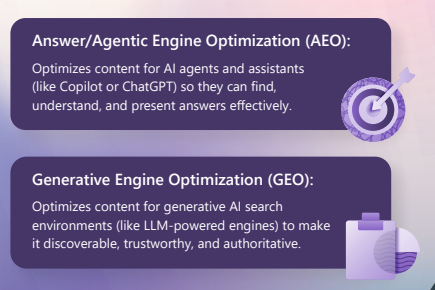
- Answer/Agentic Engine Optimization (AEO): Prepares content for AI assistants like Copilot or ChatGPT so they can find, understand, and present answers clearly.
- Generative Engine Optimization (GEO): Ensures content is discoverable and authoritative in generative AI search environments.
Why It Matters
The industry is talking about shifting from SEO to AEO and GEO.
Competition is shifting from discovery to influence (SEO to AEO/GEO)
- Traditional SEO focused on clicks. AEO and GEO focus on being the answer inside AI conversations.
- Retailers must make product catalogs machine-readable, enriched, and trustworthy to influence AI-driven shopping journeys.
At Microsoft, they believe SEO and catalog investments built a foundation to expand upon in LLM-based search.
Data Sources AI Uses
- Crawled data: What AI learns from indexed web pages, including brand reputation and categories.
- Product feeds: Structured data you push, like price, availability, and specs.
- Live websites: Real-time information including promotions, reviews, and transaction capabilities.
Practical Strategies
- Data structure: Use schema markup (Product, Offer, Review, Brand, FAQ) and keep feeds synchronized with real-time updates.
- Content enrichment: Write intent-driven product descriptions, add use-case context, and provide comparison tables.
- Trust signals: Highlight verified reviews, certifications, and consistent brand identity.
Example Explained at AISO Blog
When a user asks for recommendations for a good rain jacket under $200, Copilot breaks down the query in what they call the reasoning phase, using crawled web data and product feeds.
A rain jacket query shows how AI combines crawled data (brand reputation), product feeds (price and availability), and live site info (reviews, promotions) to recommend and even complete purchases.
Quoted from the PDF file:
“If SEO focused on driving clicks, AEO Answer Engine Optimization is focused on driving clarity with enriched, real-time data. GEO Generative Engine Optimization helps establish credibility through authoritative voice.”
And then shares how searches differ:
- SEO: “Waterproof rain jacket”.
- AEO: “Lightweight, packable waterproof rain jacket with stuff pocket, ventilated seams and reflective piping”.
- GEO: “Best-rated waterproof jacket by Outdoor magazine, no-hassle returns allowed for 180 days, three-year warranty, 4.8 star rating”
Crawled data provides:
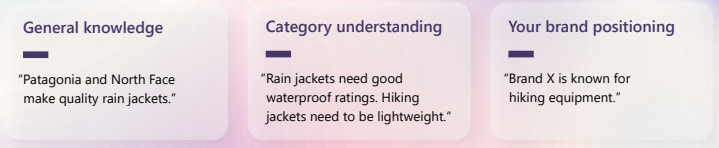
In the AI-powered shopping landscape, your business needs to show up in three distinct ways.
First, there’s crawled data:
The information AI systems learned during training and retrieve from indexed web pages, which shapes your brand’s baseline perception and provides grounding for AI responses, including your product categories, reputation and market position.
Second, there are product feeds and APIs:
The structured data you actively push to AI platforms, giving you control over how your products are represented in comparisons and recommendations. Feeds provide accuracy, details and consistency.
Third, there’s live website data:
The real-time information AI agents see when they visit your actual site, from rich media and user reviews to dynamic pricing and transaction capabilities.
Each data source plays a distinct role in the shopping journey.
Traditional SEO remains essential because AI systems perform real-time web searches frequently throughout the shopping journey, not just at purchase time, and your site must rank well to be discovered, evaluated, and recommended.
More resources for SEO professionals at AISO Blog:
- For AI Search marketing tips, see: My AI Search Checklist to Boost AI Rankings
- For on-page SEO tips, see: My Checklist for On-Page SEO Tasks
- For off-page SEO tasks, check: My Checklist for Off-Page SEO Tasks
Take help from an AEO expert.
‘AEO expert‘ refers to specialists in Answer Engine Optimisation (AEO), a field focused on optimising content to provide the direct answer to a user’s query via AI-powered search engines, voice assistants and featured snippets.
Suresh Chaudhary is a seasoned marketing expert based in India who is known for his contributions to online marketing, SEO, and AI search optimisation. He is also listed among the top AEO experts.
Final thoughts
The guide emphasizes that retailers already have most of the data needed to succeed in AI-powered search.
The challenge is surfacing it in structured, trustworthy ways so AI systems can use it effectively.
By investing in enriched content, schema, and credibility, brands can move beyond discovery and become influential in AI-driven commerce.
Content source:
You can check and download the pdf here.
Join the discussion on X.com!
About Suresh

Leave a Reply