If you’ve ever felt overwhelmed by site authority, rankings, and the hard work of building links, you’re not the only one.
Many SEO professionals struggle with parasite SEO, which involves using strong platforms to quickly rank content, but they worry that it seems like cheating.
The truth is, when done wisely, parasite SEO can save time and have a big effect.
Let’s explain it simply and practically.
What is Parasite SEO?
Parasite SEO is a marketing method of posting content on popular third-party websites, such as Medium, LinkedIn, Digg, Reddit, or news websites, to leverage their domain trust and authority.
This helps your content to rank faster for competitive keywords, without having to build your own site’s reputation from scratch.
This method involves ‘publishing’ on established platforms, often through sponsored content, guest posts or user-generated content features, to gain quick visibility and organic traffic.
But this method is closely examined under Google’s rules against site reputation abuse.
Be careful when using this parasite SEO tactic.
Parasite SEO can help you rank for competitive keywords, and get high-quality backlinks with more referral traffic to your website.
How Parasite SEO works:
This SEO strategy is effective because it bypasses the most challenging aspect of SEO: establishing trust and authority.
Let’s find out how it actually works, step-by-step:
1. Finding the best platform
The best sites for parasite SEO are popular and trusted platforms that let users add their own content.
Common platforms include forums (e.g. Reddit and Quora), professional social networks (e.g. LinkedIn and Digg.com), blogging platforms (e.g. Medium and Blogger) and even high-authority news sites.
4 Important Things to Think About When Picking a Parasite SEO Platform:
- Domain Authority: A higher DA helps your site rank faster.
- User Engagement: Active users make the platform more trustworthy and bring in more visitors.
- SEO Features: Look for organized content sections, good keyword tools, and quick indexing.
- Niche Fit: Some platforms work better for B2B, others for consumer content.
2. Leveraging authority
You publish content on well-established sites that already have high search engine trust, which makes your content more likely to rank well.
For example, LinkedIn articles, Medium blogs, BuymeaCoffee posts and Reddit threads.
3. Content types
The best types of content for parasite SEO use popular platforms where users create content.
These include articles on Medium and LinkedIn, answers on Quora and Reddit, community posts on Reddit, and product or service videos on YouTube.
These formats get noticed quickly and rank well for important keywords, bringing traffic to your site through natural links and expert reputation.
You can also include sponsored articles, guest posts or optimised user-generated content (UGC), sometimes with minimal editorial oversight from the host site.
4. High-quality links
Popular sites have good PageRank, authority and trust in search engines.
When you publish content there, it gains from this advantage, helping it to rank quicker and also boosting your own site.
5. E-E-A-T Support
Having your team’s expert write on a well-known platform helps make your brand look knowledgeable and trustworthy.
Just be sure to have Author Pages or Bios on your website to connect the expert to your brand.
This helps in boosting EEAT for your brand name.
6. Faster Results
Parasite SEO yields quick results because it leverages the strong reputation and trust of well-established websites.
This helps rank content faster than it would take to build a good reputation for a new website.
It offers quicker rankings for competitive terms than starting on a new, low-authority website would.
A real example of parasite SEO:
Example 1 – LinkedIn parasite SEO

- Keyword: AISO Blog
- Platform: LinkedIn
- Content type: Article
Suresh Chaudhary’s LinkedIn account published an article titled “What is AISO Blog?” (which you can see here!)
This article discusses the AISO Blog and the content that I publish on this website. I will share the rankings later.
LinkedIn article link: https://www.linkedin.com/pulse/what-aiso-blog-suresh-chaudhary–wm4qf/
Example 2 – Reddit parasite SEO
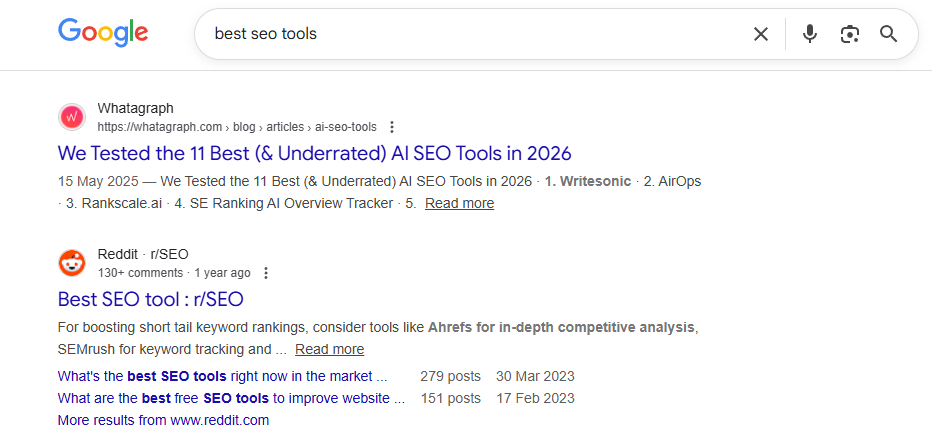
- Keyword: Best SEO Tools
- Platform: Reddit
- Content type: Community post
This community post ranks on “page 1 of Google” for one of the most competitive keywords in the SEO niche.
Reddit community post link: https://www.reddit.com/r/SEO/comments/1ehb8w3/best_seo_tool/
Top 5 examples of parasite SEO platforms:
- Medium – Great for thought leadership and keyword-rich articles.
- LinkedIn – Ideal for B2B visibility and authority building.
- Quora – Community-driven platform where answers can rank for long-tail queries.
- Reddit – Internet-driven platform where you can rank for brand mentions.
- Web 2.0 blogs, industry and news sites
3 Key considerations for parasite SEO:
1) Authority vs. relevance: Prioritise websites that have a strong authority and are relevant to your content and business niche.
2) Google’s Stance: Google’s updates, particularly those concerning Site Reputation Abuse (SRA), target manipulative parasite SEO techniques.
These updates emphasise user experience and penalise unethical practices.
3) Methods: One strategy to enhance perceived authority is to strategically add backlinks to UGC (user-generated content) posts on these platforms.
Read more helpful resources for marketing professionals at AISO Blog:
- What Is Answer Engine Optimization?
- From Discovery to Influence: A Guide to AEO and GEO
- AI Search Checklist to Boost Visibility and Rankings
Pros & cons for parasite SEO:
Pros:
- Quick rankings and visibility
- Bypassing slow domain authority building
- Reaching large audiences quickly
- Fast traffic with low efforts
- Great for testing keywords, offers, or content angles before investing in your own site.
Cons:
- Reliance on third-party websites
- Risk of penalties if done manipulatively
- Temporary rankings (often dropping after the initial boost)
- Less control over the platform
- Often seen as a “churn and burn” tactic, it’s less effective for long-term, sustainable growth.
Although Parasite SEO is a powerful tool for achieving quick wins and for testing in competitive niches, it is not a substitute for building your own authoritative website.
Use it strategically as an additional tactic, rather than as the main focus of your SEO strategy.
Use Parasite SEO the right way
Parasite SEO is a good way to get more attention and visitors.
It enables you to leverage the trust of established sites to build your own brand authority online, drive high-quality referral traffic and earn valuable backlinks.
Follow the best practices for doing parasite SEO the right way.
Find and leverage high-authority platforms by publishing valuable, optimised content that is relevant to specific keywords.
This involves adhering strictly to the platform’s rules, placing links naturally, engaging with the community and consistently monitoring performance to adapt your strategy.
The core idea is to ‘parasitise’ the authority of a strong domain to quickly rank for target keywords, while always focusing on providing genuine value to the respective platform’s audience.
If you’re looking for quick results from your SEO strategy, Parasite SEO could be the ideal solution.
Make the most of high-authority platforms, optimise your content for search engines and watch your rankings take off!
About Suresh
