Want to compare your brand with those of your competitors?
Try comparison pages and blog posts.
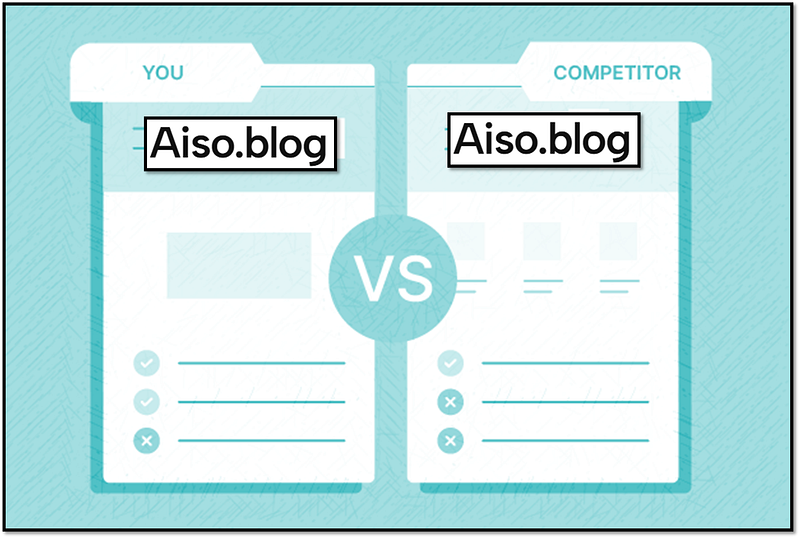
Comparison pages answer “Which is better?” with clear differentiation, visuals, features, and CTAs.
Use them to control the narrative, showcase unique value, and appear in AI Overviews.
See real examples and proven strategies to rank for vs keywords and increase trust with your audience.
What are Comparison Pages?
Comparison pages are dedicated web pages or blog posts that directly compare your product/service with rivals.
They can use feature tables, clear messaging, and social proof to highlight your unique value and help potential buyers choose you.
They often target high-intent searchers, answering their “Which is better?” question with honest, visual, and benefit-driven content to convert them.
Please note: Strategic research is required to identify competitor gaps, with a focus on one-to-one comparisons and the use of visuals such as charts. Strong calls to action (CTAs) are also included to guide users to the next step.
Why Comparison Posts are Important?
Comparison pages are crucial because they capture high-intent prospects at the decision-making stage.
This allows businesses to control the narrative, highlight their unique strengths, and build trust by providing transparent data.
Ultimately, this increases conversions by directly addressing ‘vs.’ searches (e.g., ‘[Product A] vs. [Product B]’) and guiding users to choose their product over alternatives.
They provide clear, side-by-side information that helps customers understand unique value propositions and make informed choices, thereby preventing them from seeking answers from competitors.
8 Benefits of Comparison Pages at AISO Blog:
- Comparison pages highlight the strengths and weaknesses of the product versus competitors.
- Demonstrating product advantages builds trust with potential customers.
- Conducting competitive analysis (comp vs. comp) drives top-of-funnel traffic.
- Increases visibility through discovery searches.
- AI Overviews favor these types of pages.
- Google perceives this content as neutral, helpful, and research-driven.
- Enhances topical coverage and demonstrates a deep understanding of the subject area.
- Enables brand inclusion in alternative blog or social media posts.
5 Real Comparison Page Examples
Here are a few landing pages for competitor comparisons to get you started at AISO Blog.
Example #1: Scalenut
Scalenut is an AI SEO tool that can be used to track and improve brand visibility in ChatGPT, AI Overviews, Perplexity, and other features, providing precise recommendations.
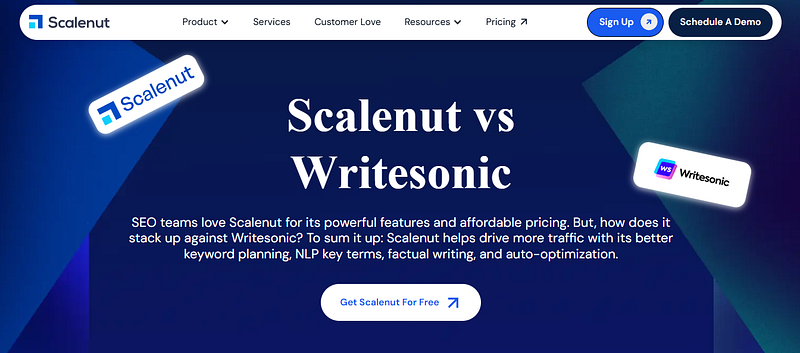
They focus on the key features of an excellent comparison page.
- Why the SEO community loves them
- TLDR
- 4 reasons to consider Scalenut
- A quick comparison at a glance
- Pricing offer
- A detailed breakdown of the feature set
- User reviews
- FAQ
- CTA – Start Your Free Trial
Example #2: NeuronWriter
NEURONwriter is a content intelligence platform that provides strategic insights for content managers and copywriters.
It delivers solutions to enterprise, agency, and SME customers.
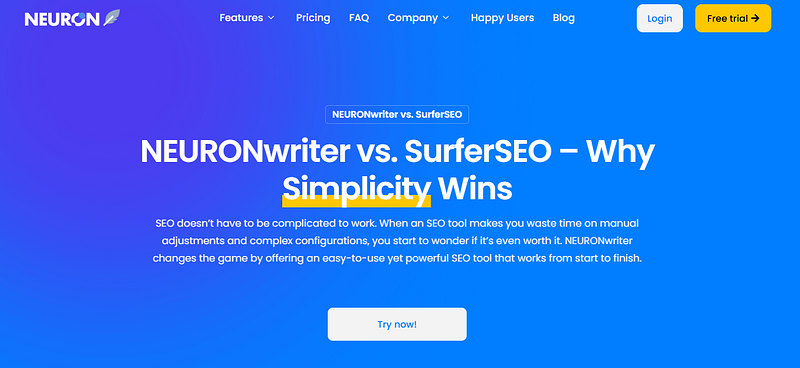
They focus on:
- Simplicity
- Differentiatiors
- Why choose them
- Advanced features
- Predictable, transparent pricing
- Blog section
Example #3: Uneed
Uneed is a social launchpad for tech products where you can enjoy guaranteed homepage visibility, powerful SEO backlink and valuable feedback from an engaged community.

They focus on:
- Enhanced visibility
- Community power
- User experience
- Early traction and feedback for your startup
Example #4: SE Ranking
Over 1 million users rely on SE Ranking for their SEO and marketing needs. Learn how it compares to competitor Semrush.
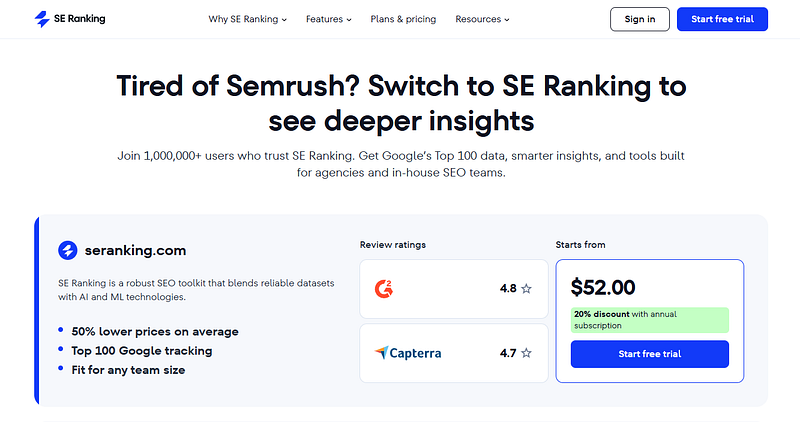
They focus on:
- Pain-point
- Userbase
- Features
- Low pricing
- Customer reviews
- A closer look to comparison
- FAQs
- CTA – Start Free Trial
Example #5: Frase
Frase.io helps content marketers, creators, and writers generate impactful AI content powered by deep, multi-source research.
They are using a blog post page for comparison, and the focus is on:
- Brand overview
- Use case comparison
- Feature comparison
- Verdict
- CTA
The 6 key elements of effective comparison pages in 2026:
Below are the six key elements of creating effective comparison pages for your brand on the AISO Blog.
- Clear headlines and subheadings: These should directly address the comparison and your solution’s superiority.
- Feature/benefit tables: A side-by-side comparison that highlights your strengths and your competitors’ weaknesses.
- Visual data: Use screenshots, charts, and graphics to make comparisons easy to understand.
- Honest and focused copy: Acknowledge competitors’ strengths, but emphasise your unique value proposition and benefits.
- Social proof: Include customer testimonials or case studies to build trust.
- Strong call to action (CTA): Guide visitors to a trial, demo, download, or contact the sales team.
5 Strategies and best practices:
Here are the top five strategies and best practices for creating comparison pages at AISO Blog.
1. Target search intent
Create pages or posts for ‘Your Brand vs Competitor X’ keywords where users are looking for specific data points or are close to making a purchase.
2. Focus on content gaps
Identify what your competitors aren’t doing that you can offer.
3. Do one-on-one comparisons
Compare against one competitor at a time for clarity.
4. Balance honesty and persuasion
Be truthful about your features and benefits, but focus on your unique advantages compared to those of your competitors.
5. SEO Integration
Optimize and use these comparison pages to rank for comparison-related searches for your brand.
Do internal link-building to create a long-lasting SEO impact for your overall brand.
Frequently Asked Questions (FAQs)
FAQs about comparison pages and blogs are outlined here, so you can learn about the advantages they offer.
1. What is a comparison page?
A comparison page is a dedicated web page or blog post that directly compares your product or service with a competitor. It uses feature tables, visuals, and clear messaging to highlight your unique value and guide high-intent buyers toward choosing your brand.
2. Why are comparison pages important for SEO and conversions?
Comparison pages capture prospects at the decision-making stage. They rank for “vs” searches, build trust with transparent data, and increase conversions by showing side-by-side differences that help users make informed choices without leaving your site.
3. How do comparison pages improve AI SEO visibility?
Google AI Overviews and search engines favor comparison content because it is neutral, helpful, and research-driven. By including feature tables, social proof, and clear CTAs, your brand can appear in AI-powered search results and gain topical authority.
You can also use comparison blogs on third-party websites via sponsored content posts using parasite SEO technique.
4. What are the key elements of an effective comparison page?
The six essentials are clear headlines, feature/benefit tables, visual data like charts, honest copy, social proof such as testimonials, and strong calls to action. These elements ensure your page is persuasive, trustworthy, and optimized for both users and search engines.
5. What strategies should brands follow when creating comparison pages?
Brands should target search intent with “Brand vs Competitor” keywords, focus on competitor content gaps, do one-on-one comparisons for clarity, balance honesty with persuasion, and integrate SEO through internal linking to strengthen long-term visibility.
Comparison Page Elements Explained
| Page Element | Explaination |
|---|---|
| Clear headlines and subheadings | Directly address the comparison and highlight your solution’s superiority |
| Feature/benefit tables | Side-by-side comparisons that showcase strengths and expose competitor weaknesses |
| Visual data | Use screenshots, charts, and graphics to make comparisons easy to understand |
| Honest and focused copy | Acknowledge competitor strengths while emphasizing your unique value proposition |
| Social proof | Add testimonials or case studies to build trust and credibility |
| Strong call to action (CTA) | Guide visitors toward trials, demos, downloads, or direct contact with sales |
Conclusion
Comparison pages are more than just marketing assets.
They are strategic tools that capture high-intent searchers, build trust through transparency, and position your brand as the clear choice against competitors.
By integrating feature tables, visuals, social proof, and strong CTAs, you not only answer the “Which is better?” question but also drive conversions and long-term SEO visibility.
When executed with research and honesty, comparison pages become a powerful way to control the narrative, highlight your strengths, and ensure your brand stands out in competitive markets.
About Suresh
